Kita, kindergarten or nursery? The types of care at a glance
 Miriam Roth
Kita, kindergarten or nursery? The types of care at a glance
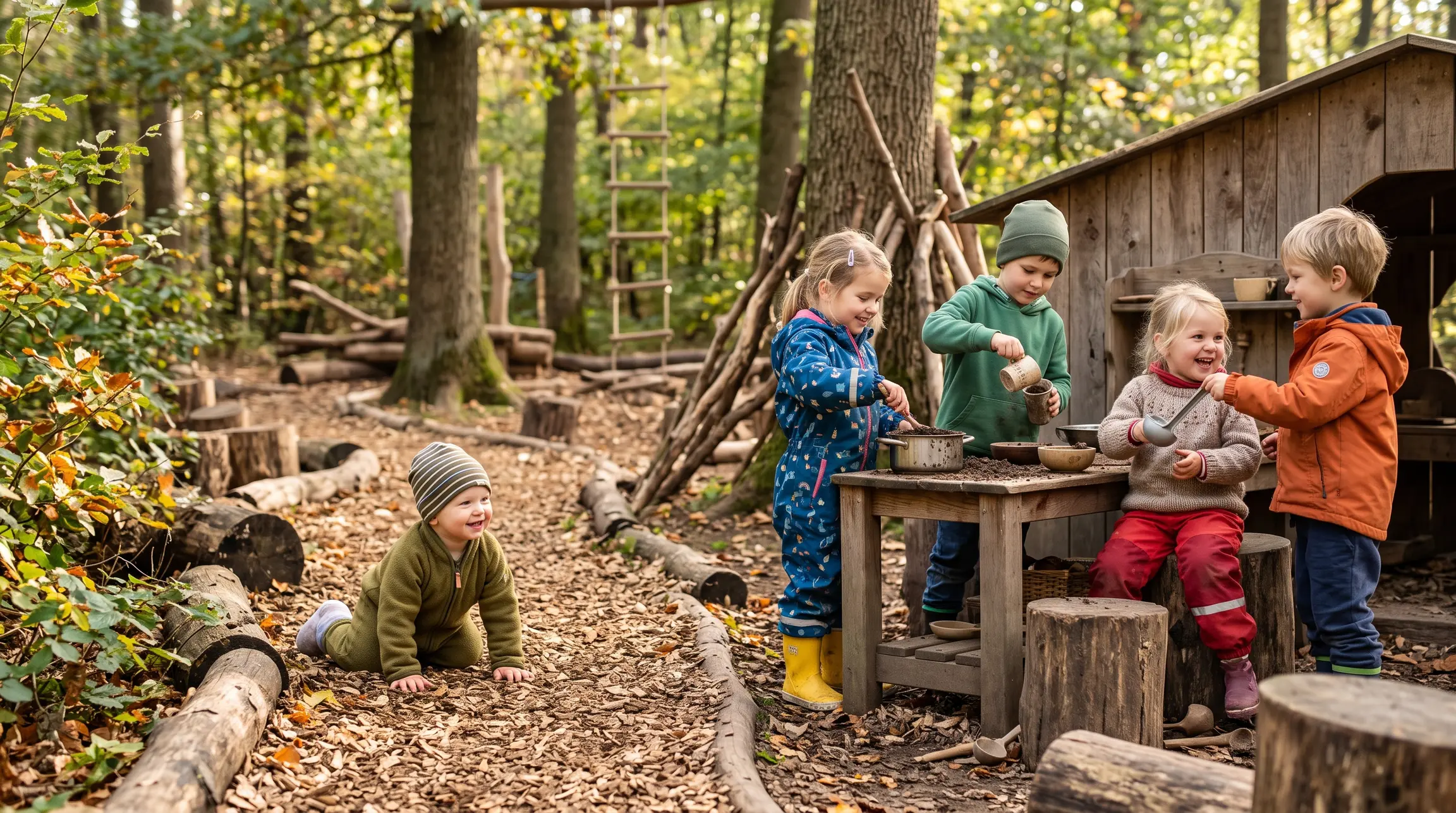
Nursery, kindergarten and Kita clearly broken down: what the terms mean, which age groups and focus areas lie behind them – and which type is meant for which age.
The short answer: "Kita" is the umbrella over all institutional childcare. Beneath it, the nursery (Krippe) looks after children under three, while the kindergarten – technically the elementary area – accompanies children from three years up to school entry. Kita and kindergarten are therefore not opposites: the kindergarten is part of the Kita. Which type comes into question depends first of all on your child's age.
Hardly any two words cause more confusion among new parents than "Kita" and "kindergarten" – and then nursery, elementary area and childminding turn up on top. The reassuring part: behind all of this lies a comprehensible order. In this comparison we sort out the terms, set the types of care side by side and support you in finding the right solution for age and need.
The types of care introduced briefly
Before we get to the comparison, a short profile of each type helps – after all, the terms stand for quite different things.
Kita (daycare centre): the collective word. Under the roof of a Kita there can be a nursery, an elementary area or both together. "Kita" therefore does not point to a particular age group but to the setting as a whole.
Nursery (Krippe): the area for the very youngest, that is, children under three. Daily life is shaped by small groups, a close staff-to-child ratio as well as plenty of care and relationship-building. The guide to the nursery (Krippe) in Hamburg goes deeper into the topic.
Kindergarten (elementary area): the area for children from three years up to school entry. Here social interaction, independence and working towards school come more strongly to the fore.
Childminding (Tagesmutter/Tagesvater): not a setting but family-like care in a small circle, often in the childminder's own home. An alternative above all in the under-three area.
Kita, kindergarten and nursery compared
The table below makes the differences visible along the criteria that matter for your choice.
| Criterion | Nursery (Krippe) | Kindergarten (elementary) | Kita (umbrella term) |
|---|---|---|---|
| Age group | under 3 years | 3 years to school entry | whole span possible |
| Focus | attachment, care, first group experience | social learning, independence, school preparation | depending on the area |
| Group size | small | larger | varies |
| Term | sub-area of the Kita | sub-area of the Kita | collective term |
What you should remember above all: nursery and kindergarten are not a counterpoint to the Kita but its age areas. And "kindergarten" and "elementary area" mean one and the same thing – the first expression is colloquial, the second the technical term.
❌ Myth: Kita and kindergarten are two different types of setting that you choose between.
✔ Fact: The kindergarten is the elementary area within a Kita. Numerous Kitas bring nursery and kindergarten together, so that a child can stay from under three years up to school without changing setting.
Which type of care suits which age?
Because the types are defined first of all by age, the assignment is usually easy – the actual decision lies elsewhere.
Nursery (Krippe) – suitable for:
- children under three years
- families to whom group experience and a pedagogical concept are important
Nursery (Krippe) – less fitting if:
- you prefer very small, family-like care (then childminding is more fitting)
Kindergarten/elementary – suitable for:
- children from three years up to school entry
- developing social skills and preparing for school
Childminding – suitable for:
- families looking for a small, family-like group in the under-three area
If you want a seamless place from nursery through to school, look specifically for Kitas that run both areas. This spares your child a change of setting later on – a clear plus for attachment.
And what about the pedagogical profile?
On its own, the type of care reveals nothing yet about the pedagogical orientation. Within every type there are different profiles – from the classic standard Kita through to a setting shaped by nature-based pedagogy. For the question "does this suit us?" this profile is often more decisive than the term alone. What a nature-based approach stands for is examined in our article on nature-based pedagogy.
How differently settings can be set up is well illustrated by a provider with several areas: Stadtküken, for instance, runs pure nurseries as well as elementary locations. Which centres there are is shown on the page of Stadtküken locations, and the pedagogical self-understanding behind them in the Kita concept.
Conclusion: Terms understood – decision made easier
The supposed difference between Kita and kindergarten quickly fades once you see through the system: the Kita is the setting, nursery and kindergarten are its age areas, and childminding is the family-like alternative. With that, your actual decision shifts away from the question of terms and towards what matters – age, hours of care and pedagogical profile. Once you have clarified these points, the right type almost follows by itself. For the next steps, the overview of the Kita in Bramfeld and the guide to the nursery (Krippe) in Hamburg are good companions.
FAQ
What is the difference between Kita and kindergarten? "Kita" is the umbrella term for institutional childcare. The kindergarten means the elementary area within a Kita – that is, the area for children from three years up to school entry. The kindergarten is therefore a part of the Kita and not a separate type of setting.
What is the difference between Kita and nursery? The nursery is the part of a Kita that cares for children under three. "Kita", by contrast, stands for the complete setting, which alongside the nursery can also contain the elementary area.
Is a Kita also a kindergarten? In part. Every kindergarten belongs to a Kita, but not every Kita is exclusively a kindergarten – many Kitas additionally take in nursery children under three.
Is "kindergarten" called "Kita" today? In everyday speech both terms are frequently used as synonyms. Technically, however: "kindergarten" stands for the elementary area for children from three years, "Kita" for the setting as a whole.
Disclaimer: The information provided in this article is intended solely for general education and information. It does not replace individual professional advice. For specific questions, a qualified expert from the relevant field should always be consulted.
👤 About the author
Miriam Roth is a specialist in social management and early childhood pedagogy and accompanies educational settings in concept work and quality management. As a freelance specialist author and systemic consultant, she brings well-founded theoretical knowledge together with the practical demands of everyday Kita life.
Sources
- Hamburg Childcare Act (KiBeG) – types of care and age groups
- Hamburg education recommendations (BASFI) – elementary area