Nature-based pedagogy made clear: definition, goals and concrete examples
 Arianne Vogt
Nature-based pedagogy made clear: definition, goals and concrete examples
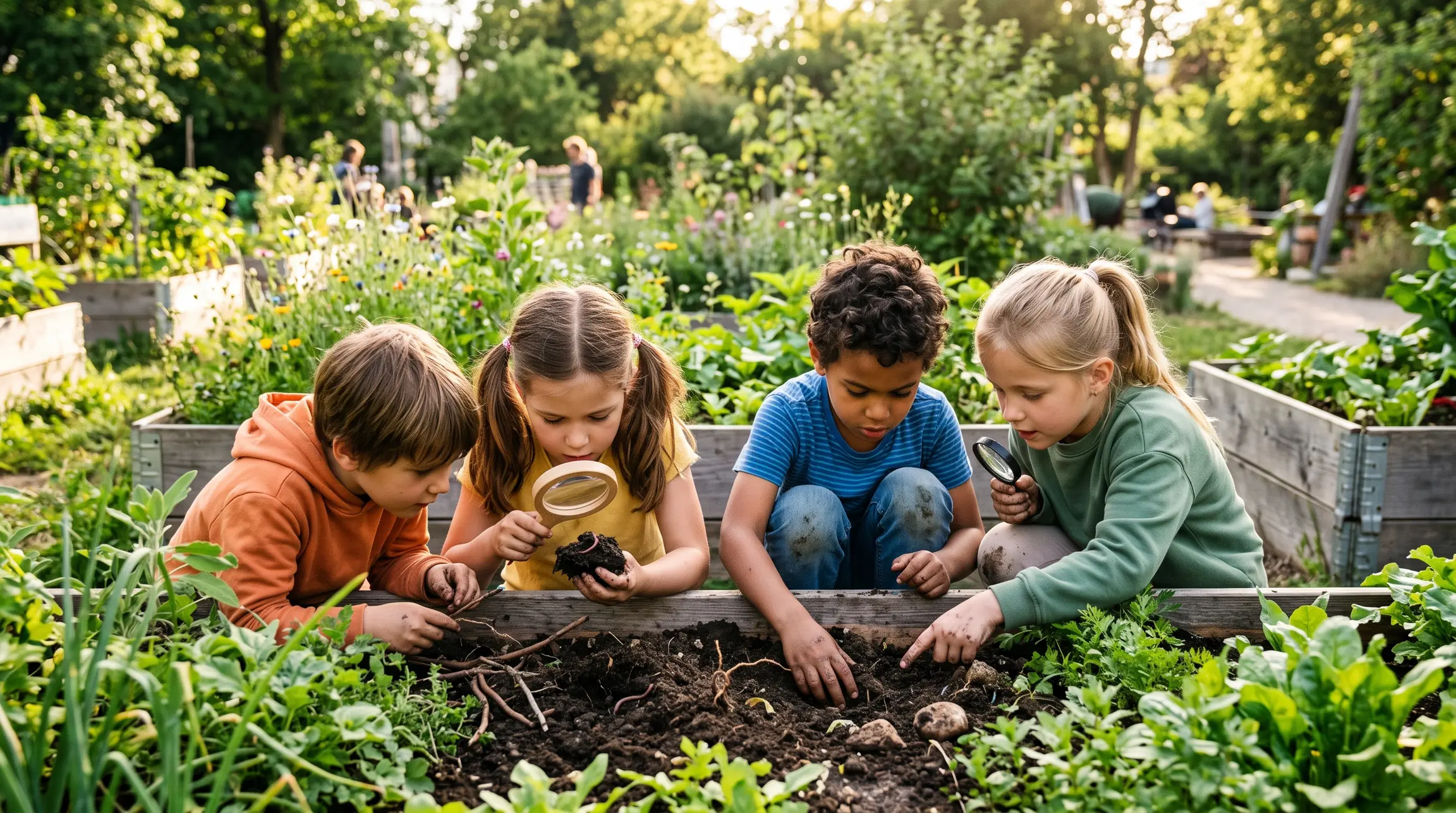
In nature-based pedagogy, nature moves to the centre: it becomes the actual place of learning and experience and is meant to strengthen children in their whole personality.
Nature-based pedagogy describes a pedagogical approach in which direct experience in nature forms the starting point of all learning. The basic idea: children open up the world not through worksheets but by becoming active themselves – they look closely, touch and try things out. Behind this stands the conviction that no place of learning is as rich as nature itself.
Parents usually come across the term while searching for a care place, when a setting calls itself a "nature Kita" or describes its profile as nature-based. The following text explains what concretely lies behind the approach, what it aims at and what sets it apart from similar concepts.
Context and origin
Nature-based pedagogy ties in with a long line of reform-pedagogical thinking in which education is regarded as a holistic process carried by experience. Early on, educators emphasised how important direct contact with nature is for a child's development. Essential impulses for today's form came, among others, from the American nature educator Joseph Cornell: his concept of "Flow Learning" describes how to immerse oneself step by step in the experience of nature.
By now, nature-based pedagogy is a firm part of the repertoire of early childhood education. In Hamburg, for example, the education recommendations explicitly list nature experience as a valuable space for learning – and quite deliberately also where children grow up in the middle of the city.
The term nature-based pedagogy is not legally protected. How a setting interprets it in detail therefore varies – a scrutinising look at the respective pedagogical concept pays off.
What are the goals of nature-based pedagogy?
The approach aims at a holistic kind of support that encompasses considerably more than mere knowledge about nature. The focus is on the following aspects:
- Self-efficacy and resilience: Outdoors, children sense that they can clear hurdles under their own power – whether they balance across uneven ground or build something from natural materials.
- Motor skills and health: Activity in the fresh air strengthens both gross and fine motor skills and at the same time does the immune system good.
- Concentration and creativity: An open environment with fewer stimuli invites absorbed play and brings out children's own ideas.
- Environmental awareness: Those who experience nature from an early age develop appreciation for it and the wish to preserve it.
Distinction: nature-based pedagogy and forest pedagogy
The two terms are often equated, yet they do not fully coincide. Forest pedagogy is the narrower variant and refers specifically to the woodland habitat – typical of it is the forest kindergarten, which spends the predominant part of the day there. Nature-based pedagogy forms the more broadly defined framework above it: any kind of nature serves it as a learning space, so parks, gardens, meadows or the greenery in the city just as well.
| Feature | Nature-based pedagogy | Forest pedagogy |
|---|---|---|
| Learning space | nature in any form (including urban) | primarily the forest |
| Scope | broader umbrella term | specific sub-area |
| Typical setting | nature Kita, urban nature concept | forest kindergarten |
For families in the urban space this is welcome news: nature-based pedagogy does not presuppose a remote forest. A well-thought-out urban nature concept taps the potential of parks, allotment gardens and green spaces just as powerfully.
Examples of nature-based pedagogy in the Kita
And how does the approach show itself in everyday life? Nature-based pedagogy is recognised less by isolated activities than by a consistent underlying attitude. Among these are, for example:
- reliable time outdoors – almost regardless of the current weather
- self-made raised beds that the children plant, tend and harvest
- following the seasons, animals and plants in the urban greenery
- building, getting muddy and experimenting with materials from nature
- outings to parks, bodies of water or nature reserves
When searching, enquire very concretely: how often and how long are the children outdoors? Is there a garden available? At what point does nature experience have its fixed place in the daily routine? From this you can tell how seriously a setting takes its nature-based profile.
How Stadtküken lives nature-based pedagogy in its Hamburg settings can be read on the Stadtküken nature-based pedagogy page as well as in the pedagogical concept.
Related topics
Nature-based pedagogy touches on numerous further aspects of early childhood education. If you are currently looking for a place, the overview of the Kita in Bramfeld offers you a first orientation. If the very youngest are at the centre, the guide to the nursery (Krippe) in Hamburg is helpful. And anyone who wants to keep the terms around care apart will find what they need in the comparison of Kita, kindergarten and nursery.
Conclusion: Nature-based pedagogy as an attitude
Nature-based pedagogy is not exhausted by occasional play in the green – it is a pedagogical underlying attitude that understands nature as a holistic space for education. It strengthens motor skills, resilience, concentration and environmental awareness, and that succeeds even in the middle of the big city. Because the term is not protected, a close look at the concept is advisable before deciding: how much nature actually takes place each day? Those who check this end up at a setting that genuinely delivers on its claim.
FAQ
What is meant by nature-based pedagogy? Nature-based pedagogy is a pedagogical approach that declares direct experience in nature to be the most important path to learning. Rather than through abstract instruction, children open up the world by observing, touching and trying things out themselves.
What is the difference between nature-based pedagogy and forest pedagogy? Forest pedagogy is oriented towards the woodland habitat, for example in the forest kindergarten. Nature-based pedagogy is broader: as an umbrella term it draws on any form of nature as a learning space – so parks, gardens and the greenery in the city too.
Why is nature-based pedagogy important for children? Nature experience strengthens motor skills, the immune system, concentration and self-efficacy and creates the basis for an early environmental awareness. City children in particular gain from it, because they experience ecological connections directly on their own doorstep.
Is nature-based pedagogy a protected term? No. A legally defined standard does not exist. What a Kita means by nature-based pedagogy in detail is set out in its pedagogical concept – before deciding, it is worth taking a look inside.
Disclaimer: The information provided in this article is intended solely for general education and information. It does not replace individual professional advice. For specific questions, a qualified expert from the relevant field should always be consulted.
👤 About the author
Arianne Vogt brings well-founded experience in Kita management and organisational development from her many years as a centre director and qualified specialist. Working independently and at the same time as a lecturer, she prepares specialist topics from early childhood education and pedagogical quality in a way that keeps them practical and professionally sound.
Sources
- Hamburg education recommendations for the education and upbringing of children in daycare settings (BASFI)
- Joseph Cornell – Flow Learning / nature-based pedagogical methodology
- Specialist literature on forest and nature-based pedagogy in early childhood education